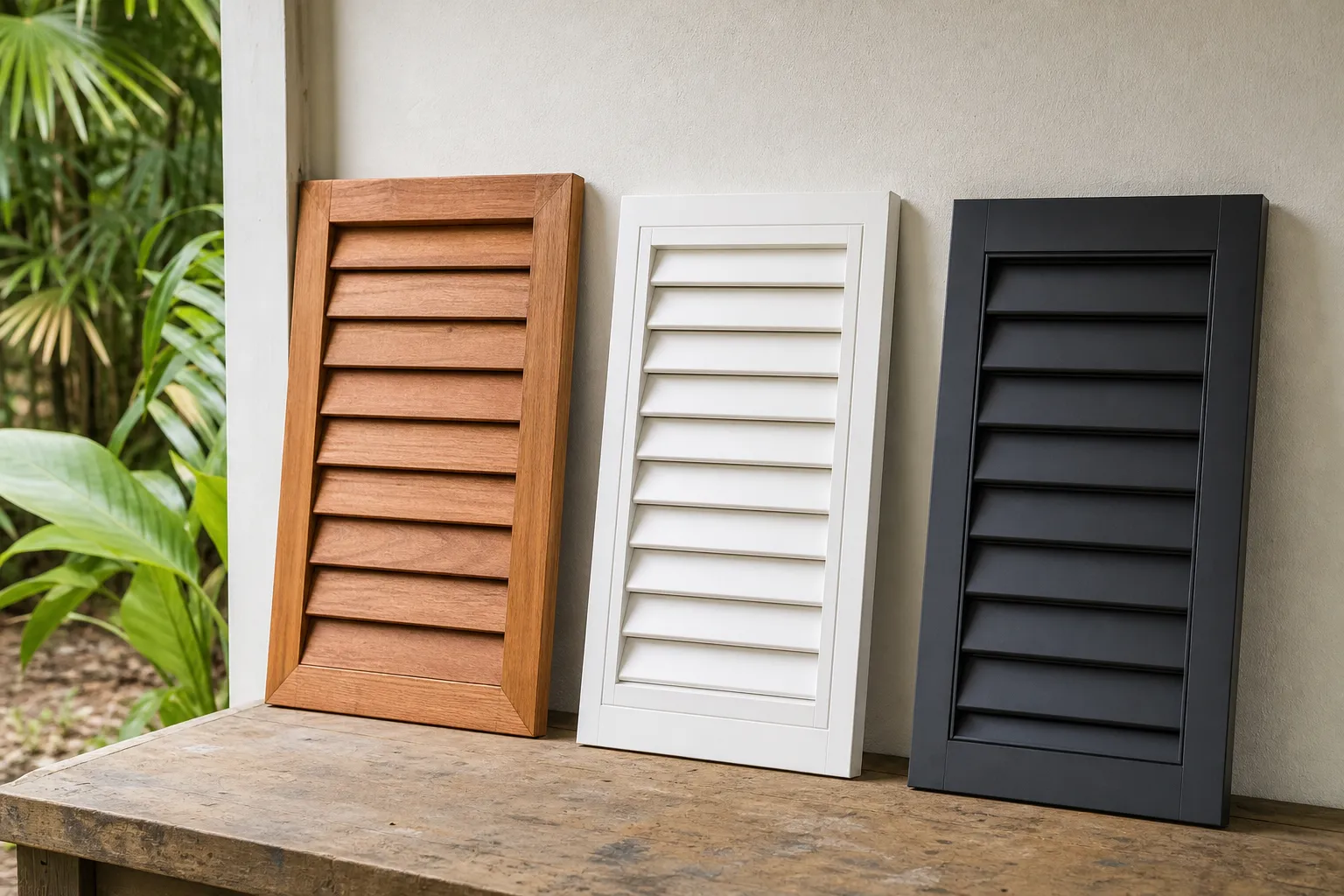
Timber for living areas and bedrooms where you want a natural finish. PVC for bathrooms, laundries and kitchens. Aluminium for anything outside and for the widest spans.
Timber
Western red cedar and basswood are the timbers most often used for shutters. Both are light and stable, which lets panels be made wide without sagging. Cedar has a rich natural grain and is usually stained or oiled; basswood is smoother and is usually painted.
Timber is at its best in dry rooms. In wet rooms it can swell and the finish can break down. Outside, timber needs regular re-coating to cope with sun and rain.
PVC
PVC shutters are unaffected by water and steam, which makes them the standard choice for bathrooms, laundries and kitchens. They wipe clean and do not need repainting.
The trade-off is weight and stiffness. PVC is heavier than timber and less rigid, so better products have aluminium reinforcing inside the louvres and frames. Ask about it, and about panel width limits, before you order for a large window.
Aluminium
Powder-coated aluminium is the material for external shutters: on verandahs, decks and exposed windows. It is strong enough for wide panels, can be locked, and adds privacy and shade to an outdoor room.
Because external shading stops heat before it reaches the glass, an aluminium shutter outside a western window can do more for a hot room than any covering inside it. Near the coast, wash salt and dirt off powder-coated surfaces a few times a year.
Side by side
| Material | Best for | Avoid in | Upkeep |
|---|---|---|---|
| Timber | Living areas, bedrooms | Wet rooms, unprotected exteriors | Dusting; re-coat if the finish wears |
| PVC | Bathrooms, laundries, kitchens | Very wide panels without reinforcing | Wipe clean |
| Aluminium | External use, wide spans | Rooms where a timber look matters | Wash down periodically |
Common questions
Can I mix materials through the house?
Yes, and many homes do. Painted timber and white PVC shutters with the same louvre width look consistent from room to room.
Do aluminium shutters get hot?
Dark colours in direct sun do get hot to the touch. Lighter colours reflect more heat.
Sources
This guide is general information for Queensland homes. It does not replace an inspection or advice from a licensed tradesperson.