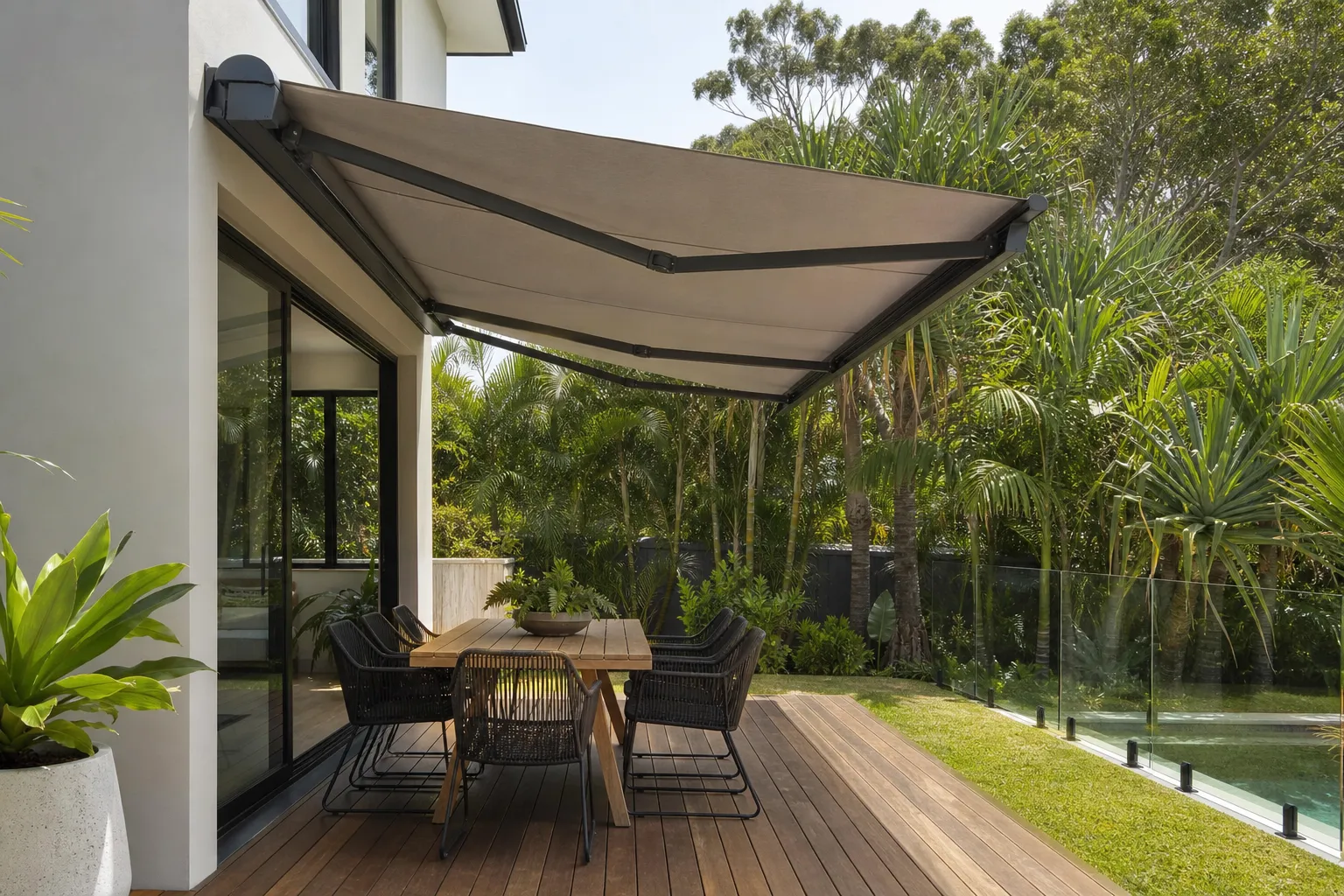
For an exposed wall, choose a fixed awning or external shutters rated for the site. Folding-arm and straight-drop awnings give flexible shade but must be retracted in strong wind, so add a wind sensor or accept the habit of winding them in.
Why shade the outside
Once sunlight has passed through glass it turns to heat inside the room. The Your Home guide recommends shading glass externally for that reason, with fixed horizontal shading on north-facing windows and deeper or adjustable shading on east and west, where the sun is low.
In practice that means an awning on a western window often does more for comfort than a new blind inside it.
The main types
- Fixed awnings in aluminium or polycarbonate stay out all year. They are the most wind-resistant option and also keep rain off an open window.
- Folding-arm awnings extend over a deck or patio with no posts. They give the largest area of shade and are the most vulnerable to wind when extended.
- Straight-drop and channel awnings run vertically, often in side channels, to enclose a verandah or screen a window. Channel systems hold the fabric along both edges and cope with breeze better than free-hanging drops.
- External louvres and shutters are adjustable and lockable, at a higher cost.
Wind, fixings and fabric
Ask the supplier what wind conditions the product is designed for, and ask how it will be fixed to your wall. An awning is only as strong as its anchors; brick veneer, timber framing and lightweight cladding each need a different fixing method.
Retractable awnings should be wound in when strong wind is forecast or when you leave the house. A wind sensor that retracts a motorised awning automatically removes the need to remember. For fabric, solution-dyed acrylic holds its colour and resists mildew; open-weave mesh keeps a view and lets some breeze through.
Approvals and installation
Small retractable awnings rarely need approval, but fixed structures over a deck or near a boundary can. Rules differ between councils and estates, so check with your council or a building certifier before you order.
In Queensland, building work above the value threshold set by the QBCC must be carried out by a licensed contractor. Motorised awnings also need an electrician for any new wiring.
Common questions
Can I leave a folding-arm awning out in the rain?
Light rain is usually fine if the awning has enough pitch for water to run off. Water pooling on the fabric can stretch it and strain the arms, so retract it in heavy rain.
How long does awning fabric last?
It depends on exposure and care. Rinsing off dirt and salt, and letting the fabric dry before it is rolled up, are the two habits that extend its life most.
Sources
This guide is general information for Queensland homes. It does not replace an inspection or advice from a licensed tradesperson.