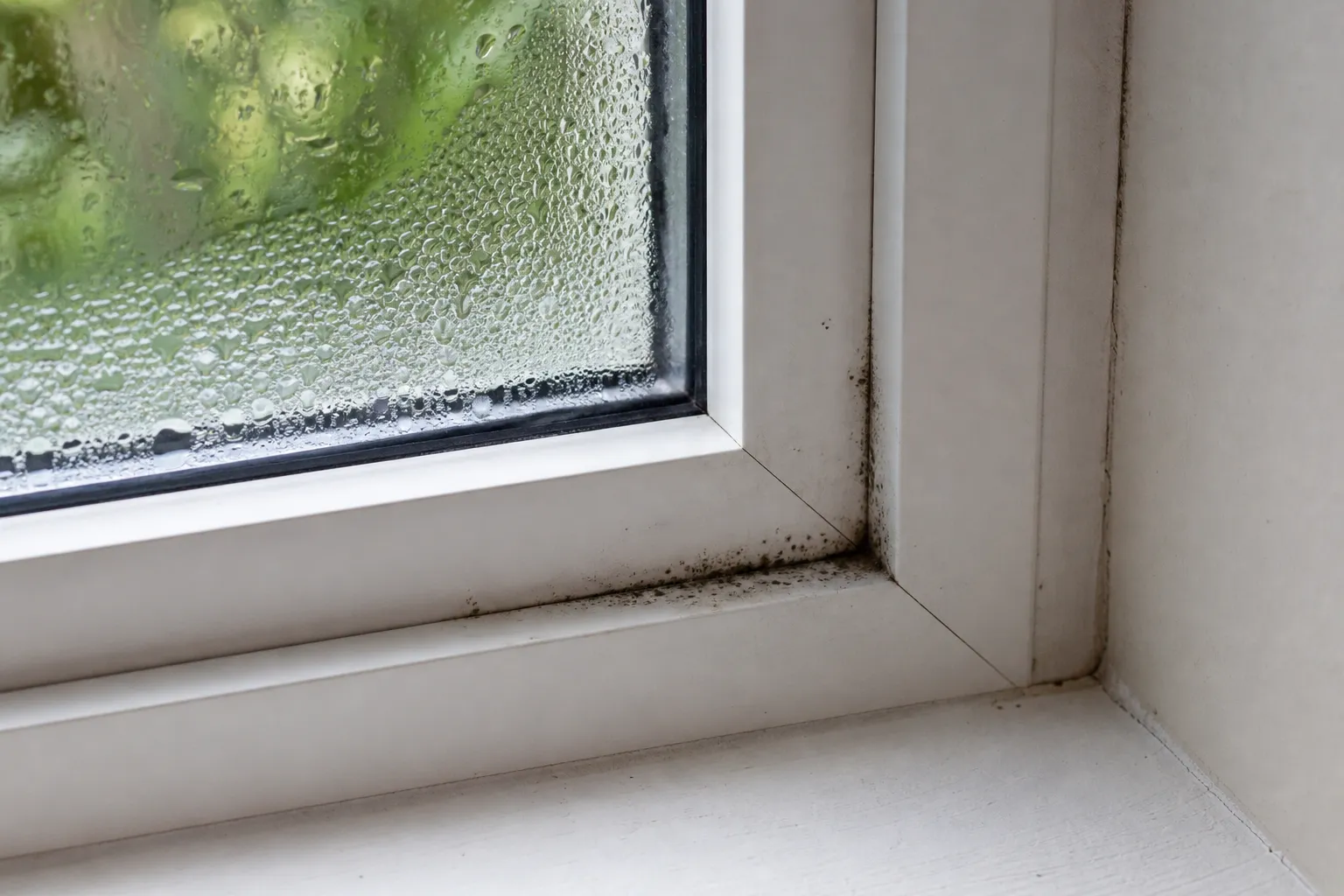
Mould along the bottom of the glass that wipes off and returns slowly is usually condensation: improve airflow. Mould that returns within days, with staining on the wall around the frame, means the wall is wet and the source needs to be found.
Start with condensation
Warm, humid indoor air meets cooler glass and leaves water on the frame and sill. Aluminium frames conduct heat readily, so they are especially prone to it. If the mould sits along the bottom edge of the glass and wipes off cleanly, condensation is the likely cause.
The fix is airflow. Open the room for part of each day, run the exhaust fan during and after showers, and keep blinds or shutters slightly open so air can move across the glass. Heavy curtains drawn hard against a cool window trap damp air behind them.
Signs that water is getting in
Mould that returns within days of cleaning, staining on the wall below or beside the frame, swollen skirting boards and paint that bubbles are not condensation. They mean the wall is wet from the inside.
- After rain only: check the flashing above the window, the external sealant and the gutters overhead.
- All year, rain or not: suspect a pipe. Bathrooms, laundries and kitchens often share a wall with a window.
- Worse after showers or the washing machine: a waste pipe or a failed shower seal is the usual culprit.
When to bring in a plumber
A simple check is the water meter. Turn off every tap and appliance, note the reading, and look again after an hour. If it has moved, water is escaping somewhere on the property.
At that point the job needs a licence. A licensed plumber can pressure-test the lines and locate the leak without opening the whole wall. In Queensland you can confirm a plumber's licence on the QBCC register before they start; in New South Wales, licences are issued by NSW Fair Trading.
A leak that is flooding a room or cannot be isolated at the meter should not wait for business hours. Most cities have after-hours services for exactly this: readers in Sydney, for example, can call an emergency plumber in Sydney rather than waiting.
Cleaning up and putting things back
Queensland Government health advice is to fix the moisture source first, then clean. Wear gloves and a mask, avoid dry brushing, which spreads spores, and dry the area thoroughly. Porous materials that stay mouldy may need to be replaced.
Once the wall is dry, repaint and refit the window furnishings. Timber shutters and fabric blinds that have sat against a wet wall should be checked for warping and staining before they go back.
Common questions
Do shutters make window mould worse?
Not if the louvres are left partly open so air reaches the glass. Fully closed furnishings on a cool window hold moisture against the frame.
Is cleaning enough to get rid of it?
Cleaning removes what you can see. If the surface stays damp, the mould comes back, so the moisture source has to be fixed first.
Is household mould a health risk?
It can be, particularly for people with asthma, allergies or weakened immune systems. Queensland Health publishes guidance on safe clean-up.
Sources
This guide is general information for Queensland homes. It does not replace an inspection or advice from a licensed tradesperson.