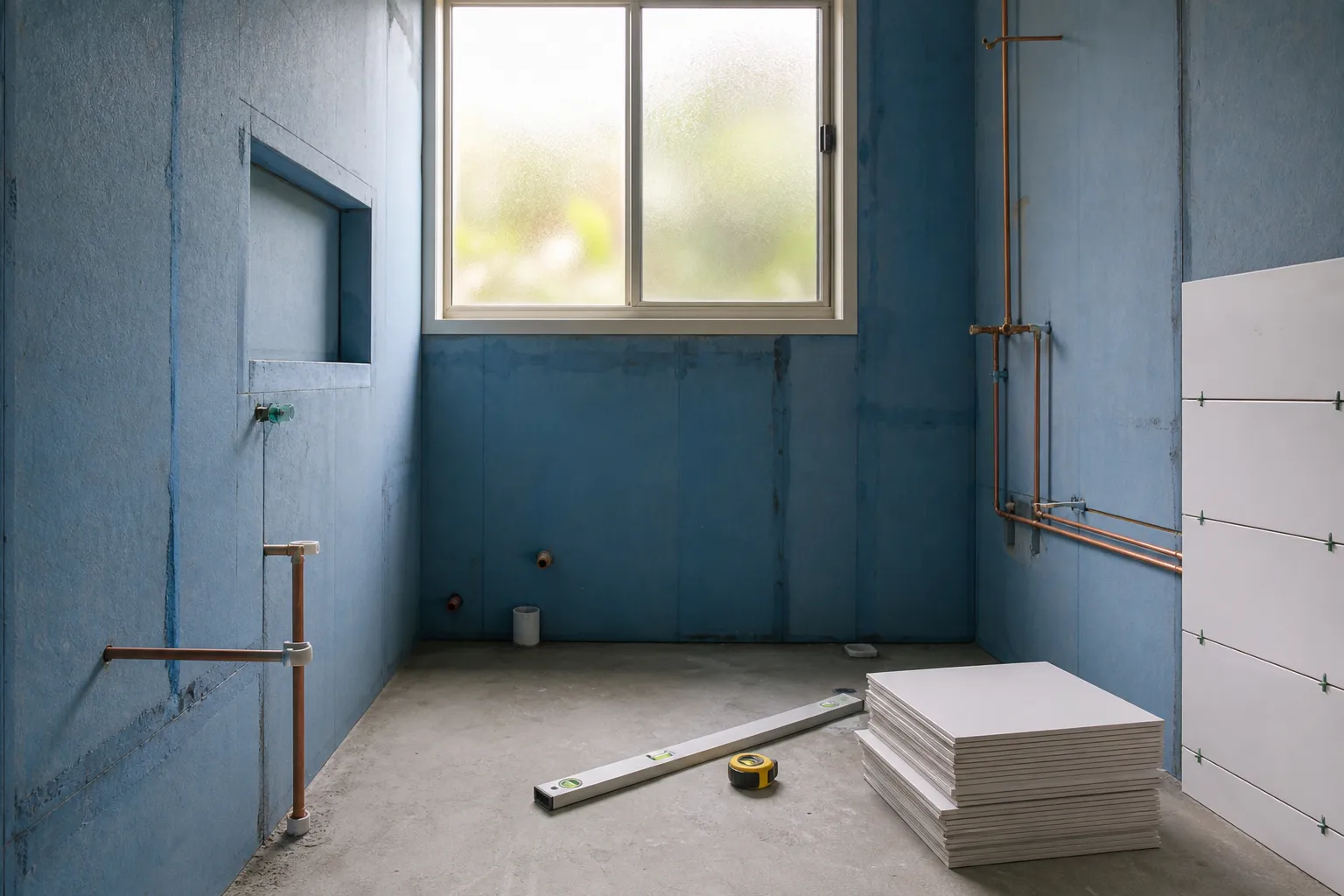
Fix the layout first, because moving drains is the costliest change. Confirm who is licensed for the plumbing and the waterproofing, plan the exhaust fan and the window covering together, and only then choose tiles and fittings.
Layout comes first
Keeping the toilet, shower and basin where they are is the single biggest saving in a renovation. Each fixture connects to a waste pipe with a set fall, and relocating one can mean cutting into a slab or re-running pipes under the floor.
If the current layout does not work, get the plumber in before the designer finishes drawing. What is possible depends on where the existing stack and drains run.
What needs a licence
In Queensland, plumbing and drainage work must be done by a licensed plumber or drainer, and the business contracting for the work must hold the right QBCC contractor licence. Waterproofing wet areas and tiling are also licensed building work above the QBCC's value threshold. Electrical work needs a licensed electrician.
You can check any of these on the QBCC's public registers before you sign. See Find a trade for how.
Homes built before 1990 may contain asbestos in wall and ceiling sheeting. Have suspect material assessed before any demolition.
Waterproofing and ventilation
A failed membrane is the most common reason a new bathroom has to be pulled apart. The National Construction Code sets out which floors and walls in a wet area must be waterproof and to what height. Ask your contractor which system they use and for the certificate that covers it when the job is finished.
Then get the moisture out. An exhaust fan ducted to the outside, not just into the roof space, is the difference between a bathroom that dries in an hour and one that grows mould on the ceiling. Tapware, toilets and other plumbing products should carry WaterMark certification.
The window: light, privacy and steam
A bathroom window has to give daylight and privacy while being soaked in steam every day. Frosted glass solves privacy but not glare or the view out when the window is open.
PVC or aluminium shutters and aluminium venetians are the usual choices because they do not absorb moisture. Avoid timber and fabric here. Whatever you fit, make sure the window still opens easily: an opening window does as much for a bathroom as the fan.
Common questions
Can I do any of the work myself?
Painting, fitting accessories and similar finishing work, yes. Plumbing, drainage and electrical work must be done by licensed trades. Rules for owner-builders are set by the QBCC.
How do I check the waterproofing was done properly?
Ask to see the membrane before it is tiled over, and ask for the waterproofing certificate at completion. Keep it with the house records.
Sources
This guide is general information for Queensland homes. It does not replace an inspection or advice from a licensed tradesperson.